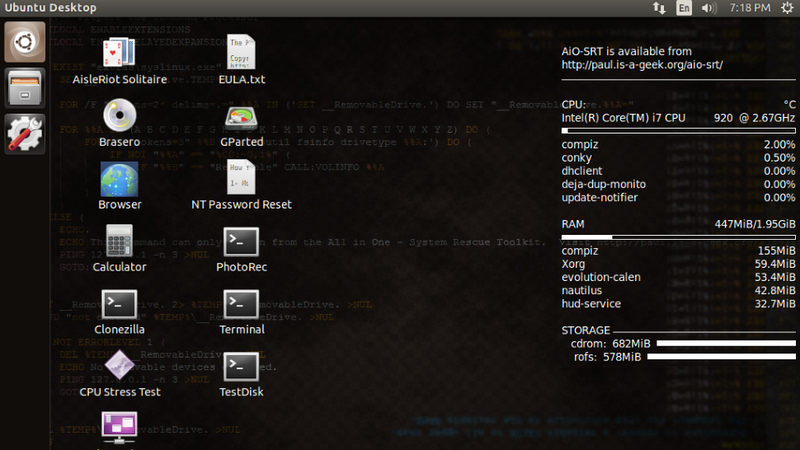
There’s no shortage of system rescue and repair discs you can download and keep handy for when your PC gives you problems, but this one, from reader Paul, is streamlined, simple, and has only a few effective tools on it (and no bloat!) http://lifehacker.com/5984707/five-b…
Paul, who’s a field technician (I remember those days!) sent in his rescue disc to us and explained that he’d just made it available to the public on his web site. Over at his site, he explains why he bothered in a world where there are so many discs to choose from:
There are already so many utility discs out there, I know. Many of the other discs I have used in the past tried to do way more than I wanted, with sometimes 10-20 different applications and utilities that all do the same thing. This overwhelming level of choice does not easily support the faster pace required of field service work. I also wanted to have both my bootable repair environment and Windows utilities in the same package to reduce the number of discs I had to maintain and keep on hand.
This disc started as a bunch of batch files that allowed me to work on multiple computers throughout my day and replicate the same level of quality results on each computer without having to maintain checklists on paper. Even with checklists, I would sometimes skip or miss steps that meant a variety of results when fixing PCs. Thus, an automated utility was born! I have since been using this disc in my own line of work for 99% of the problems I encounter in the field.
Just because the disc is streamlined doesn’t mean there’s a shortage of tools on it, though. You’ll have to head over to his site for the full list (and to support the project!) and for download links to burn your own or make your own bootable USB drive with all of the utilities on it. There are a few standouts though—the disc is a live CD, so you can boot to it and run things like Clonezilla, GParted, NT Password Reset, PhotoRec, Terminal, and some other utilities (even a game of solitaire you can play while waiting for other stuff to finish!)
The Windows Autorun portion of the disc contains a ton of Windows diagnostics for testing, troubleshooting, and repairing bad Windows installs or partition issues, tools to extract or re-add product keys, network testing tools and speed tests, and even some security and malware removal tools. All in all, if you have a Windows PC—especially one you built yourself—or you’re in charge of maintaining others, the disc is worth a look. All in One – System Rescue Toolkit | Paul Bryand Vreeland
Publier un jeu de cartes dans une revue a deux principaux inconvénients – ce n’est jamais extrêmement bien payé et les cartes ne sont pas imprimées comme de vraies cartes à jouer – mais, quand il s’agit d’une revue de bandes dessinées, cela a en revanche un avantage extraordinaire, c’est que l’on peut être sûr de la qualité et de l’originalité des illustrations.
Mythos, qui paraît dans le numéro 200 de la revue Lanfeust Mag, voit s’affronter les divinités de quelques grandes mythologies, et l’équipe de Lanfeust n’a pas fait les choses à moitié, faisant appel à des artistes différents pour illustrer chacun des panthéons. Steven Lejeune a dessiné les dieux de la Grèce antique, Joël Jurion et Audrey Mitsuko ceux de l’Inde, Philippe Fenech et Kmixe ceux de l’Égypte ancienne, Sébastien Calveau ceux des vikings, Joël Liochon ceux des aztèques, et enfin Dianiela Dimat quelques uns des innombrables dieux du Japon. Je ne dirai pas quelle série est ma préférée pour ne pas faire de jaloux. Le résultat est splendide à la fois de variété et de cohérence, et je me prends à rêver d’une belle édition avec de jolies cartes – peut-être en anglais, qui sait, si j’arrive un jour à convaincre un éditeur.
Mythos n’est qu’à moitié une nouveauté, et c’est même peut-être le tout premier jeu de cartes dont j’ai eu l’idée. Ce n’est guère plus qu’une bataille, à deux joueurs, dans laquelle j’ai cherché à introduire un zeste de tactique et de psychologie.
Chacun des six plis d’une manche se joue en deux temps, les deux adversaires jouant une deuxième carte après que la première a été révélée, et la force de chaque joueur étant égale la somme des puissances deux cartes. Si votre première carte est bien plus forte que celle de votre adversaire, il n’est sans doute pas nécessaire d’en jouer une deuxième aussi forte, votre adversaire devant logiquement renoncer à remporter le pli pour économiser ses forces – à moins, bien sûr, qu’il ne fasse le même raisonnement, pense que vous allez jouer petit pour conserver vos meilleures cartes et en profite pour mener une contre-attaque fulgurante. En outre, les cartes rapportant plus ou moins de points de victoire, certains plis peuvent être plus intéressants que d’autres. Bien sûr, certaines cartes – pas trop, deux ou trois par joueur – ont des effets spéciaux qu’il faut aussi prendre en compte.
Le thème mythologique s’est rapidement imposé. Il permet en effet de construire des sets de douze cartes bien différents, à peu près équilibrés, avec des effets assez thématiques, basés sur les parèdres ou les attributs divins. Avec six mythologies, il y a quinze duels possibles, ce qui donne au jeu une grande variété.
Une première version de Mythos, parue en 1999 dans la revue Sciences et Vie Découvertes sous le nom de Combat des Dieux, ne comprenait que quatre mythologies, grecque, égyptienne, viking et aztèque. En 2011, pour la revue japonais Gamelink, j’ai ajouté les dieux hindous, tandis que Hayato Kisaragi et Nobuaki Takerube imaginaient un set japonais. Pour la troisième et très belle version qui paraît en 2016 dans Lanfeust Magazine, je me suis contenté de retravailler un peu les équilibres du jeu et d’ajouter quelques effets de cartes ici et là. There are a few drawbacks to publishing a card in a magazine. The first is that it’s usually not very well paid, and the second is that cards are not printed on professional cardstock. On the other hand, when it’s a comics magazine, it has a major edge, one can be sure the graphics will be gorgeous. Mythos is published in the 200nd issue of the French comics magazine Lanfeust mag. It’s a game about warring Gods, and the Lanfeust team did not do things by halves, hiring different artists to illustrate the different pantheons. Steven Lejeune drew the ancient Greek gods, Joël Jurion and Audrey Mitsuko the Hindu ones, Philippe Fenech and Kmixe the Egyptian ones, Sébastien Calveau the Viking ones, Joël Liochon the Aztec ones, and Daniela Dimat some of the countless Japanese gods. I won’t telle which set is my favorite. The result is gorgeous, both varied and consistent, and I hope someday there will be an edition with true game cards, may be by some US publisher – email me if interested. Mythos is not really new, and is based on what might have been my very first card game idea. It’s the game of War, for two players, with some tactics and psychology added. Every round is made of six tricks, and each trick is played in two steps. Players play a first card, reveal it, then play a second one, and the total strength of a player is the sum of his two cards’ values. So, if your first card is much higher than your opponent’s one, you might think you don’t need to play another strong one, since your opponent will probably give up this trick and save his strength – unless, of course, he makes the same reasoning, thinks that you will keep your best cards for later, and plans a swift counter-attack. Furthermore, some cards, usually low ones, score more points than other when winning tricks, and each player has two or three cards with challenging special effects. The mythological setting was obvious from the beginning. It allows for different and more or less balanced sets of twelve cards each, some of which have thematic effects based one gods’ attributes. Six mythologies make for fifteen possible duels, which makes the game really varied. The first version of this game, published in 1999 in the French magazine Sciences & Vie Découvertes, had only four different mythologies, Greek, Egyptian, Aztec and Viking. In 2011, for the Japanese magazine Gamelink, I added a Hindu set, while Hayato Kisaragi and Nobuaki Takerube designed a Japanese one. For this third version, I mostly fine-tuned the balance and added a few new and fun card effects.
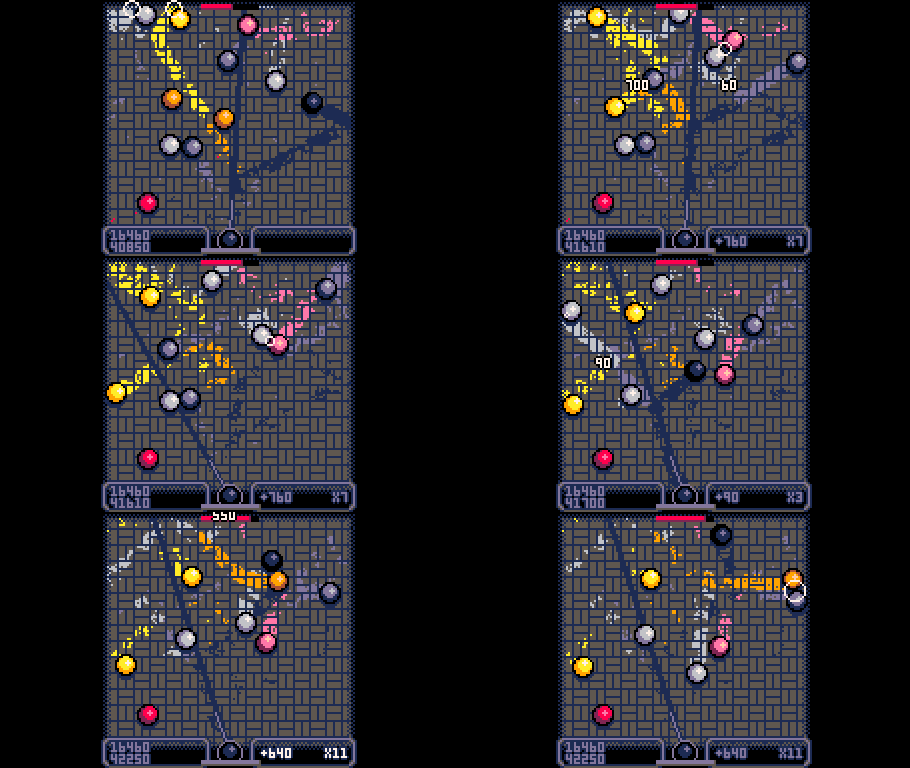
Combo Pool is simple and great fun: use the arrows to aim your ball, and hit c to fire it.
It’s a game where you throw colored marbles against each other. If two marbles of the same color make contact, they merge and upgrade to the next color. Your lifebar diminish with the number of balls on the field. If you lifebar is empty, you enter in a sudden death mode, and your last ball must save you by removing some balls.
Controls : use arrows left-right to adjust direction, and key "c" to launch a ball. Click on the game to give it focus if buttons doesnt work.
It’s made with Pico 8, a "fantasy console" that enforces strict technical limitations on what your games can do. The result is a growing library of perfectly-designed, disciplined 8-bit style game projects. They’re often tantalizing suggestions of how good the video games of an 80s childhood should have been, but weren’t.
You can cheat by only ever firing straight up, but even then you can get in trouble because of the number of balls that form on the axis. Other suggestions for refining the game: allow players to hold the button to determine how powerful a shot to release, and have a button to hold that allows more refined angles.
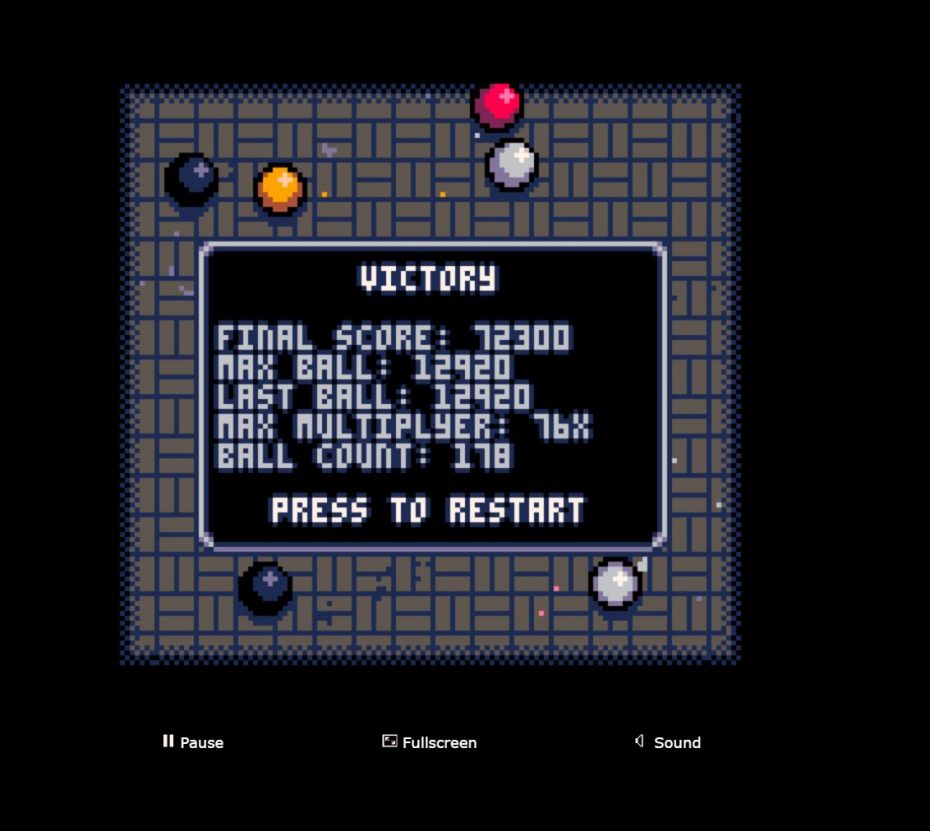
Here’s my best score:
Beer can chicken is a grilling season staple, but now there’s a new beer-steamed entree in town, and it is the hearty cabbage. Sure, it’s a great option for your veggie friends, but it’s also just a really tasty way to cook cabbage.
Cabbage has no natural cavity (obviously), so you’ll have to carve one out yourself. Just cut out a hole large enough for a can of beer to fit halfway inside, scooping out the core with a spoon. Brush some oil on the cabbage, and season the whole thing with salt and pepper. Next, grab a can of beer and drink half of it. Shove the can inside your hollowed-out cruciferous, coat the cabbage with BBQ sauce, and set it upright on the grill. Cook for about 45 minutes, brushing with more tasty sauce every 15 or so, until the out leaves are browned.
Remove cabbage from grill and relieve it of its beer can throne. Slice into strips, and place on kaiser rolls with fresh carrots and grilled onion for super tasty sandwiches that will be enjoyed by pretty much anyone, vegetarian or not. Meet Beer-Can Cabbage, the Ultimate Vegetarian BBQ Main Course | Epicurious Photo by Chelsea Kyle, prop styling by Alex Brannian, food styling by Dawn Perry.
Today, P.M. Dawn exists as a faded memory for most music fans, if they’re remembered at all. But Attrell Cordes made songs like nothing that came before. Beautiful, sweeping melodies paired with lyrics of regret, remorse, heartache and profound loss. And then there were those surreal, recurring images of water.
To casual fans, P.M. Dawn was “the big guy and the other guy.” The big guy was Attrell Cordes, known as Prince Be, who passed away yesterday. The other guy was his brother Jarrett, who usually went by DJ Minutemix until scandal pushed him from the group in the mid-90s. They grew up in Jersey City, which may be the only part of their story that sounds like a regular rap group. The standout moments of the group’s history are like no other group in hip-hop — enormous pop hits and groundbreaking production work, a deep catalog of songs suffused not just with pathos but often with genuine despair, a notorious and absurd run-in with a hip-hop legend, and a stream of profound moments of personal and professional tragedy.
P.M. Dawn’s unique mix of extraordinary success, deep influence on current sounds, and a relentlessly heartbroken outlook raises the question: What on earth inspired Attrell Cordes in the first place?
It’s easy to forget, nearly 20 years after they faded from view, that P.M. Dawn enjoyed both enormous commercial success and broad critical acclaim. The conventional narrative of the early 90s in mainstream hip-hop is of a time when the genre transformed from a rebellious and challenging upstart artform to the dominant musical force in culture, maturing from golden age boom bap to globally-dominant gangsta rap with only a brief detour into the Native Tongues.
The works we associate with that moment of transition in the early 90s are still respected as classics —albums like 36 Chambers and The Chronic. But in 1993, those legendary albums sat on the charts and the critics’ lists right next to The Bliss Album…? Or, to respect the full title of P.M. Dawn’s sophomore effort: The Bliss Album…? (Vibrations of Love and Anger and the Ponderance of Life and Existence). The name alone does a good job of explaining exactly why P.M. Dawn was both beloved and mocked.
So what is P.M. Dawn‘s rightful legacy in hip-hop history? Are they sidelined today because they were hippies? Maybe, but so were De La Soul until De La deaded the D.A.I.S.Y. age. Was it because they were too soft? After all, P.M. Dawn‘s catalog is full of overtly romantic songs suffused with heartbreak, as likely to be sung as rapped. But in a world where Drake dominates and everybody from Kanye to Lil Wayne gets some of their biggest pop hits by singing moody songs about their feelings, it seems as if history has come down decidedly in favor of the styles the group pioneered. So how did P.M. Dawn end up sinking into obscurity?
The answer to P.M. Dawn may lie beneath the surface.
[Content notice: This piece includes references that may be troubling to readers sensitive to abuse/violence.]
1. Making Waves
Baby you send me, baby you send me Set adrift on memory bliss of you
Though they billed themselves as a group, P.M. Dawn was barely even a duo — Attrell was always the creative force behind the work, the lead voice on every song. Those songs typically matched samples of very white, very pop artists to thick layers of Beach Boys harmonies. More than half a decade before the artist intermittently known as Puff Daddy would become one of the biggest stars in pop (and earn the ire of hip-hop purists) with tracks built entirely around top 40 hits, P.M. Dawn was riding a Spandau Ballet song to the top of the charts. Indeed, when SoundScan was first used to calculate music sales in 1991, the very first song to be certified #1 in sales was “Set Adrift On Memory Bliss.”
It’s hard to imagine now, but at the turn of the 90s, before the echoes of the Biz Markie suit would change sampling culture forever, many hip-hop heads policed each other’s use of samples. While the prior year’s “U Can’t Touch This” had been similarly brazen in lifting Rick James’ work in service of creating an MC Hammer hit, nobody in 1990 defied convention so profoundly as P.M. Dawn did in lifting the entire hook of a sleepy adult contemporary staple that had only faded from radio only a few years earlier.
P.M. Dawn was different from the start. They followed in the footsteps of one of their idols, Jimi Hendrix, by beginning their career in earnest in England. Signed to Gee Street records, they didn’t come up in the hip-hop tradition of selling records out of the trunk of their car, but rather rode the “Ashley’s Roachclip” beat out of the clubs in London, perhaps never to better effect than on their debut hit, “Set Adrift on Memory Bliss.” Built from a sample of Spandau Ballet’s “True”, but draped in even more layers of ethereal vocal harmonies, the song illustrates perfectly that all of P.M. Dawn’s obsessions and brilliance were fully formed from the start.
The structure of the song exemplifies Attrell’s hit formula during the rise and peak of the group’s commercial success. There’s a classic break beat, which today sounds like pure dance but which was at the time just as evocative of serious hip-hop in the Eric B. and Rakim vein. Over the beat, that Spandau Ballet sample, which promised crossover success while still being undeniably catchy enough to bring along reluctant hip-hop fans. And then there’s the rhymes. At the same time that LL was screaming his way through “Mama Said Knock You Out”, Prince Be delivers his lyrics just above a whisper. And not LL’s sexy and urgent “I Need Love” whisper, but the murmur of someone thinking aloud while nobody else is home.
In their signature hit, like all their songs, P.M. Dawn’s lyrics are vivid, evocative, inscrutable.
The camera pans to a cocktail glass Behind a blind of plastic plants I find a lady with a fat diamond ring And then you know I can’t remember a damn thing
The scene described is hard to place, but it does seem to loosely fit one scenario: The words can be read as a recapitulation of the opening moments of Prince’s 1986 cinematic flop, Under the Cherry Moon. Ordinarily, it’d be absurd to think the lyrics to a Top 10 pop hit include a Prince reference so obscure that Questlove would struggle to recall it, but this is from Of the Heart, of the Soul and of the Cross: The Utopian Experience, an album where one of the other songs (“Reality Used To Be A Friend Of Mine”) actually samples dialogue from the movie Under the Cherry Moon. Similarly obscure cultural references continue throughout the song, with almost deliberately inaccessible moments like the Tribe Called Quest-meets-Married With Children nod, “Christina Applegate, you gotta put me on.”
But of course, the song dates to a time when Dennis Miller was still funny; obscure references were an even more meaningful way of signifying social belonging in the pre-Wikipedia, pre-Google, pre-Genius era. And rather than signifying street realness, Prince Be was signifying catholic cultural tastes that were unapologetically middle class, as likely to be white as black, more likely to be wounded than boastful.
Even in an era where the Spandau Ballet sample was widely considered too brazen and too prominent to be legitimate hip-hop, the song’s charm was undeniable, and set a pattern not just for the group’s future work, but for pop radio overall. When one-hit-wonder Gerardo wanted to follow up his signature “Rico Suave”, he was shamelessly ripping off Set Adrift in his song “Love”; by the time mega-popular boy band Color Me Badd was searching for a new sound a few years later, they would go to the same well with their song “Choose”, under the guidance of hands no less gifted than super-producers Jimmy Jam and Terry Lewis.
Prince Be himself would revisit P.M. Dawn’s signature song just a few years later, when he was asked to produce a track for the Backstreet Boys’ eponymous 1997 album—which would go on to become one of the most successful albums of all time.
The effort yielded a revamped version of the song, complete with new lyrics, along with what was likely one of the most lucrative production gigs of Prince Be’s career.
But at the dawn of the 90s, P.M. Dawn enjoyed a brief moment where they captured a truly new sound and the attention of the world and it seemed they would be able to ride that wave of success almost indefinitely.
2. Got Me Floating
I drift along in a sea of compulsion Whether or not I’m dead I have no idea
Those lyrics pop up in the middle of “The Beautiful”, a standout on the first P.M. Dawn album, which evolves a brief segment of the Beatles’ “Baby You’re a Rich Man” into a full-fledged song, ethereal and funky and appropriately titled. It’s striking that even when starting from a Beatles hook, Prince Be finds himself afloat.
When it came time to create their followup album, though, Prince Be began with the formula that had yielded their biggest hit to date. On “Set Adrift On Memory Bliss”, the group sampled a white artist’s pop hit from half a decade earlier and added cascading layers of harmonies on top, along with a soft-spoken and inscrutable rap. For “Looking Through Patient Eyes”, they went back to the well, using the bulk of George Michael’s “Father Figure” as the basis for their own Top 10 pop hit, albeit with lyrics that were even more abstract and challenging than “Set Adrift.”
The only familiar element for fans to hold on to in “Patient Eyes” was Prince Be’s omnipresent obsession with water imagery in the lyrics.
Oil and water, lust and sympathy I life and death my way through the sun Where originates all the pain That leaves my memory a traumatic sponge And sings to you
Though that first single from The Bliss Album…? followed a familiar formula, the rest of the album challenged listeners at almost every opportunity. As Tom Breihan put it when revisiting the album a few years ago,
It’s soft, frilly, nebulous, willfully feminine. On the album’s first chorus, Prince Be croons, “I cry when midnight sighs,” whatever that means. The only guest on the whole LP is Boy George, gently wrapping his voice around Prince Be’s on “More Than Likely.” There’s a cover of the Beatles’ “Norwegian Wood” that flirts with the Beatles’ starry-eyed psych-rock the same way the Beatles, at the moment they recorded the original, were flirting with Eastern modalities. Entire songs waft by without any drums, and when drums do show up, they’re breakbeat shuffles that, in 1993, signified house music as much as they did rap, especially with the pianos P.M. Dawn loved to pair them with.
Part of the challenge that Prince Be took on in his work was introducing his listeners to his most important influences, typically by recontextualizing their work in his distinctive style. Musical influences surrounded the Cordes brothers right from the start; the stepfather who raised them had been an early member of Kool and the Gang, their mother had sometimes sung gospel, and several of their aunts and uncles were DJs. By the time Prince Be had become a famous artist in his own right, he was legendary amongst serious collectors for the breadth of his record collection and his knowledge of sampling history.
Despite that access to a deep and eclectic record collection, outrageously mainstream acts like the Beatles were near the top of the list of P.M. Dawn’s influences. Building on the brilliance of “The Beautiful” on their first album, P.M. Dawn decided to do a full cover of “Norwegian Wood”, ending up with a version more evocative of Prince Paul’s productions for De La Soul than reverent to the original. What was left unchanged? Well, the lyrics, of course—giving Prince Be the chance to say he “crawled off to sleep in the bath.”
Just as important in the list of psychedelic influences on P.M. Dawn is Jimi Hendrix. In 1993, they were asked to contribute a track to Stone Free, one of the first prominent multi-artist Hendrix tributes. P.M. Dawn provided one of the highlights of the collection with what must be the only Hendrix cover that samples the Jungle Brothers’ “Jimbrowski.”
The song? “You Got Me Floating”, naturally.
P.M. Dawn soon became popular enough to actually work with artists they admired. One of those artists was Boy George, who duetted with Prince Be on The Bliss Album…?’s “More Than Likely.” It was George who got the standout lyric in the first verse.
What’s the use in floating if all it does is tell You someone’s under you
That duet with Boy George was followed a few months later by a duet with Elton John on his Duets album. Prince Be was saying, as clearly as possible, that he cared a lot more about his musical influences than his hip-hop credibility.
3. A Sea of Doubt
I can understand that the stakes are high But I’d really like to know what I’ve done and why I’m floating in a sea of doubt when it comes to that
Like so many of P.M. Dawn’s songs, “Even After I Die” covers Prince Be’s insecurities and self-loathing in a context that’s deeply mortal. He seems to be reckoning with his legacy, a fixation that only increased after the birth of his children.
One part of that legacy was unfortunately too clear. Even people who know nothing else about P.M. Dawn know that KRS-One bum-rushed them onstage at one of their shows. The context was deeply stupid, even in the lengthy annals of stupid hip-hop beefs. Prince Be, while doing an interview for Details in January 1991 to promote The Utopian Experience, started to ramble about not believing in reality. It wasn’t a particularly effective or clear way to argue his point, but context makes clear that he was riffing on not wanting to obey conventional social labels. From that interview:
With years of hindsight, it reads as a particularly poor form of album promotion, but given that these were the words of an obscure and introverted 20-year-old artist who was dealing with press for the first time, it’s not that egregious. A few days after the article came out KRS revealed his great offense to Prince Be’s slight (and demonstrated the full hypocrisy of his “Stop The Violence” movement) by throwing Prince Be from the stage of an MTV concert at the Factory in New York.
Legendary hip-hop journalist and critic Bill Adler wrote up the full story at length on his site, but context makes clear that KRS had been embarrassed by attacks from rappers like Ice Cube and decided to prove his toughness by…going after the softest rapper in the game.
It’s hard to overstate how huge the reaction was. At at time when hip-hop was too scary for most of mainstream media, USA Today put the story on the front cover of their Life section.
But while traditional media condemned KRS for his attack, the response from the hip-hop community was nearly unanimous. The Source (then at the peak of its credibility and authority in hip-hop) convened a panel of attendees of the show to discuss the attack, and T-Money got the last word on P.M. Dawn.
Chris Wilder, then the managing editor of The Source, revisited the attack a year later, summarizing his reaction to KRS taking the stage: “The whole Bronx was on stage and all of Brooklyn and Uptown was on the floor screaming, ‘Go! Go! Go!’ and jumping as high as I’ve ever jumped at a party.”
In a 1996 interview for Addicted To Noise, Prince Be discussed why he had moved to largely singing on his albums, instead of rapping:
A lot of hip-hop artists say that P.M. Dawn can’t rhyme. So I said, OK, I won’t rhyme. All criticism I take in. It either builds me up or breaks me down. I take things people write about me totally seriously. It is me, so to speak. And when I hear that people hate me, it really affects me as well. So the reason why I’m not rapping is that the hip-hop industry told me not to.
4. Raining Cats and Dogs
So when it’s raining cats and dogs I won’t complain and I won’t mind When it’s raining cats and dogs I’ll understand the reasons why…
From the start, P.M. Dawn was presented as a duo. But what was clear was that Attrell, as Prince Be, was the driving creative force behind P.M. Dawn; Jarrett, as DJ Minutemix, seemed to be a junior partner, whose onstage role was primarily as a hype man and backup singer. Prince Be also determined their strategy for reaching fans.
Despite a series of massive hits, P.M. Dawn had taken a blow from both the KRS-One attack and the changing style of mainstream hip-hop. By the mid-90s, the group was clearly in a situation where they would either make a hit record or fade away. Their strategy with Jesus Wept, their third album, was unconventional and bold: They would embrace a sound that might fit on alternative rock radio, which was then ascendant, and stop trying to win hip-hop credibility. Helping them was the fact that P.M. Dawn were early adopters of Internet technology, nurturing a fanbase that had started to create early fan sites and forums that connected the community.
The Jesus Wept album had strong material, but getting alternative outlets to embrace the lead single “Downtown Venus” was a leap. The effort didn’t quite work. In an online chat for MTV a week after the third album’s release, Prince Be was morose even by his own typically pessimistic standards, as these excerpts show.
VIIdeadsi: When did you first realize that your music made a strong impact on the current generations? PRlNCE BE: When I realized that there was an immense amount of people that hate me. People either really love P.M. Dawn or really hate P.M. Dawn JZito1364: Do you like being a role model for thousands of young people? PRlNCE BE: It depends. What is a role model? You tell me JZi. Is it someone that people can look up to? Or is it someone that is continuously crucified? Knows it, likes it, and takes it. Editor8: How do you expect your record sales from “JESUS WEPT” to compare to your previous records? PRlNCE BE: I don’t expect anyone to buy it. Which is pretty much what’s happening.
The chat continued in that vein, culminating in openly hostile questions making it past the moderators.
Jayj43: do you enjoy living as a sellout to other rappers? PRlNCE BE: Very much so, I mean… What’s your definition of a sell-out? A sellout is someone who does music that they hate and music that they can’t feel simply for the purposes of making money. As I’ve been saying all nightk, I’m too emotional of a person not to be in my music. I love my music, if I were making hardcore hip-hop, then I would really be a sellout, a-hole. Micdawg: So what do you want to have achieved when it’s all said and done? PRlNCE BE: I don’t know, and that’s the chicken shit answer. But it’s the truth. I’m in this game because I don’t know what else to do with my emotions. With my spirituality. And with my passion for escapism. I love you all because I hate you all because I love you all because I hate you all. Because I love you all because I hate you all. See what I mean? I don’t know diddly. When someone finds out what existence is, please let me know. I’m at the end of my rope. Peace.
The cause for Prince Be’s despair was dramatic: His brother Jarrett, who should have been participating in these promotional activities and performances for the new album, was nowhere to be seen.
Word filtered out just as the album was released that Jarrett had been arrested for sexually assaulting one of the brothers’ 14-year-old relatives.
Though Jarrett had been second fiddle in the group, his arrest on such sensational charges overshadowed any chance that the music had of being evaluated on its merit.
Prince Be was characteristically cryptic in commenting on the situation, and didn’t clearly distance the group from his brother’s arrest. It would be another decade before he unequivocally declared that Jarrett was no longer part of the group.
But the damage was done. P.M. Dawn’s attempt to redefine its sound and maintain its relevance was completely derailed by the charges against Jarrett. The charges were later dropped, but by then Jarrett had been quietly dismissed from the group. No subsequent P.M. Dawn album received any real attention from radio or retail.
5. Comatose
Maybe it’s the undertow of what the tide took The put together scenes Make it all seem clean
The song “Comatose” from The Utopian Experierence ended up being eerily prescient; In late 1992, Prince Be entered a 3-day coma right in the midst of their biggest run of hit songs. He was diagnosed with diabetes, and its complications would dog him for the rest of his life. For years, it seemed Prince Be’s worst health issues world arise each time P.M. Dawn released new work that had the potential to return them to prominence.
Despite their commercial decline, Prince Be never stopped making music that was every bit as compelling as their work during their peak. In late 2000, they used the web to promote an upcoming album, Fucked Music, which ended up containing some of their strongest songwriting. But the release was botched and only a handful of fans got copies of the album directly from the website. Prince Be had a minor stroke not long after, and the planned proper commercial release never happened.
A few years later in 2003, a new single called “Amnesia” popped up, this time with real distribution on legitimate outlets. It was meant to promote an upcoming album, The Jim Sullivan Syndrome, but the same pattern followed—the album never got a proper release, and health issues along with business complications kept the music from all but the most diehard fans. Though P.M. Dawn had long been influenced by Prince, it seemed entirely unintentional that they mirrored Prince’s decades-long habit of having some of his best material remain unreleased in a private vault, with fans forced to circulate illicit copies of the work. Even when considering their released work, some of the best P.M. Dawn songs were strewn across obscure b-sides, out-of-print soundtracks and as production jobs for other artists, just like one of their biggest heroes.
In 2005, a reality TV show called “Hit Me Baby One More Time” held a competition where formerly-popular groups competed to see which could still win over the audience. For P.M. Dawn’s appearance on the show, Prince Be even went so far as to reconcile with his brother DJ Minutemix, at least enough to bring him onstage for the duration of the taping. P.M. Dawn triumphed, winning over the crowd with a strong performance of “Set Adrift On Memory Bliss” and Puddle of Mudd’s “Blurry.” Coming on the heels of some live performance dates the year before, where they had at times joined their early-90s alt-rap peers Arrested Development, the group seemed poised for a potential comeback.
Just before their triumph on the show, Prince Be endured a massive stroke that left him partially paralyzed. But as his condition worsened, he was unable to capitalize on the promising new bout of attention; from that point on, P.M. Dawn’s few live performances were handled by Gregory Carr, one of Attrell and Jarrett’s cousins who had begun backing up the group in the 90s under the name Doc G. Today, most of P.M. Dawn’s social media presence is maintained by Doc G, who also put out a handful of unremarkable releases using the P.M. Dawn name, with no apparent input from Prince Be.
In the final half decade of Prince Be’s life, Doc G carried on the P.M. Dawn name (perhaps not entirely with the blessing of Prince Be’s family, depending on the accuracy of online rumors), while Prince Be endured a further series of health setbacks. Another stroke, dialysis, and a leg amputation all took a heavy toll.
Though his body was challenged, Prince Be’s work was undergoing a renaissance. The obvious influence and foresight of his work inspired a new wave of young creators to reappraise P.M. Dawn’s catalog.
In 2002, Brandy and Ray J covered “I’d Die Without You” on her album Full Moon. Then in 2013, Alicia Keys released her own version of “Die Without You”, recorded in 2007 during sessions for her As I Am album. Perhaps most dramatic was Childish Gambino’s 2014 cover of the song, which led to Donald Glover performing the song live a number of times in some of his most prominent media appearances.
A new generation of artists had declared their appreciation for P.M. Dawn, and started to undo nearly two decades of disrespect.
6. Now I’m Underwater
Oh, I apologize for all the things I’ve done But now, I’m underwater and I’m drowning Is it my turn to be the one to cry? Isn’t it amazing how some things completely turn around? So take every little piece of my heart Yeah, take every little piece of my soul Yeah, take every little bit of piece of my mind Cause if you’re gone, inside, I’d die without you
Though “Set Adrift On Memory Bliss” may be P.M. Dawn’s biggest hit by raw numbers, the group does enjoy the good fortune of being best remembered for their best song. “I’d Die Without You” was a standout even on the all-killer, no-filler Boomerang soundtrack where it debuted. (How good was that soundtrack? Another of its biggest singles was Boyz II Men’s “End of the Road.”)
Lush, vulnerable, and idiosyncratic (the song opens with a 20-second-long meandering piano instrumental) it captures all the wonderful contradictions of P.M. Dawn in one song. As in so many of his lyrics, Prince Be is both deeply in love and deeply apologetic. Musically, the vocals are as ethereal as pop gets; the background vocal here is Prince Be’s sister Cheryl Cordes, not DJ Minutemix. But the pulsing bass fits right into the Jeep Beats sound of hip-hop of the era. It’s one of the greatest love songs of the decade.
But it’s not a regular love song. Indeed, it’s easiest to understand P.M. Dawn’s catalog as largely a collection of love songs, but almost none of them are romantic love songs. As the title of 1998’s Dearest Christian, I’m So Very Sorry for Bringing You Here. Love, Dad makes clear, Prince Be was not afraid to write love songs that were about love toward his son, or his children, or as odes to those long lost. While the elliptical lyrics of course make it hard to be sure, it’s likely that most of P.M. Dawn’s songs aren’t written with an eye toward a romantic partner.
So who are all these love songs written to?
Certainly Attrell Cordes loved god, as he understood gods and religions to work, and it’s clear a few of his songs were about loving god. Some of P.M. Dawn’s work seems to be directed to the memory of Prince Be’s father, who is said to have died of pneumonia when the boys were very young.
But then there’s the sad footnote that shows up in many of the earliest interviews with Prince Be. He recounts a story of having watched his younger brother Duncan Cordes drown when Duncan was only two years old. Understandably, most interviewers of the time didn’t press too hard on the subject when simply trying to write a story about a new album release, so little was said about how the incident happened. The only hint of something deeper lay in an Associated Press story that came across the wire on May 10, 1978.
Attrell Cordes is survived by his wife Mary, and their three children: Christian, Mia and Brandon.
We’ve discussed kitchen tools everyone should have, and tools everyone on a budget should have, but if you’re willing to put a little money into your home cooking, here are some solid kitchen tools that may cost a little more than usual, but will pay you back in flavor, time saved, or just plain quality of life.
10. A Food Processor
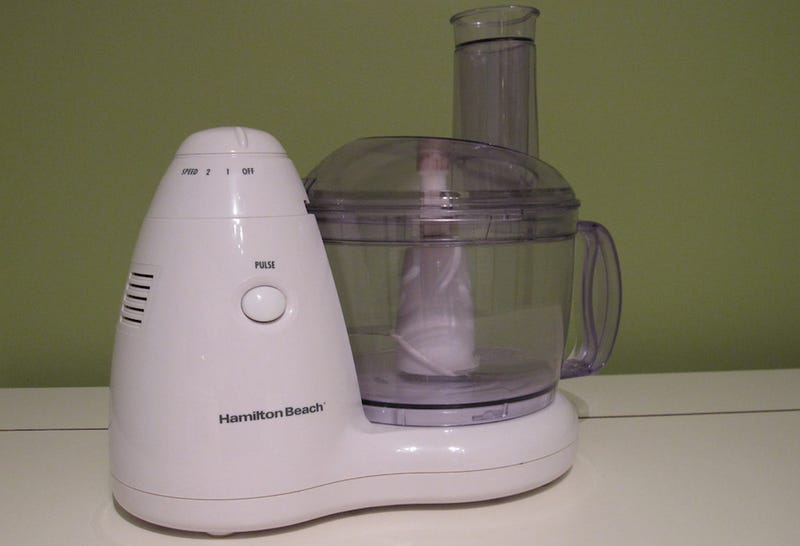
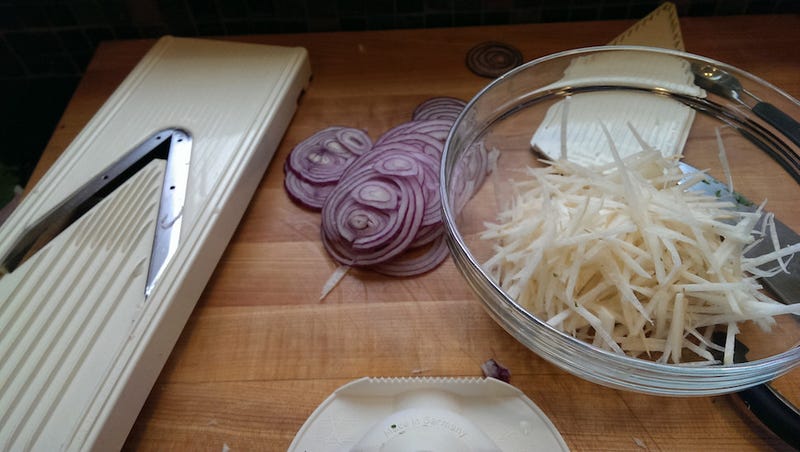
It’s really tough to understate how much good a food processor in your kitchen can do. Sure, you could always just grab a knife and get to chopping, slicing, and julienning, but a food processor can do so much more than cut up vegetables. A solid one can mix dough, make deliciously smooth pesto or hummus, and emulsify salad dressing in a snap. Want to get adventurous? Try making pizza dough, home-ground burger patties, or even perfect whipped cream. http://skillet.lifehacker.com/kitchen-tool-s…
You can get some inspiration for what to do with your own food processor—or some good reasons to consider buying one—in our Kitchen Tool School feature on them. Trust me, I only have a small, space-saving model, and I use it for hummus, pesto, and deviled eggs all the time, and couldn’t imagine not owning one.
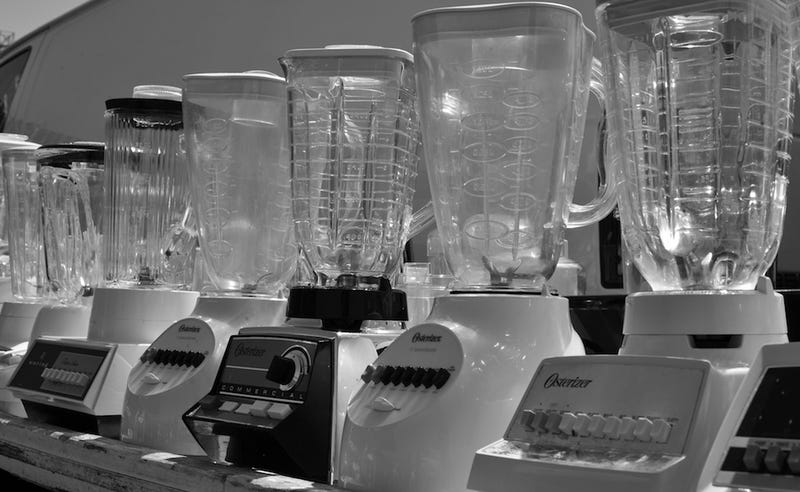
Most of us have a blender in our kitchens, but when you bought yours, what did you look for when you picked it up? The wattage of the motor maybe, or the size of the carafe? A good one will excel in both of those departments sure, with a strong motor and a large carafe that’s big enough for what you want to put into it, but there’s so much more to consider. http://gear.kinja.com/five-best-blen…
While you don’t need to blow out your budget on a Blendtec or something extremely pricey, you should at least buy carefully, and spend a little on something that’ll do multiple jobs and last you a long time. Our friends at Kinja Co-Op have some suggestions here, along with some affordable options if their top tier gives you sticker shock. Go forth and smoothie, soup, and emulsify without fear. http://gear.kinja.com/whats-your-fav…
4. A Bench Scraper or Pastry Cutter
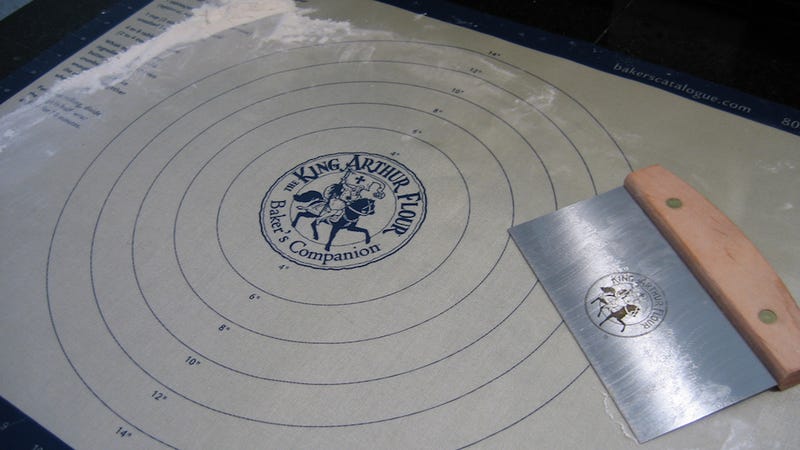
While a lot of the items we’ve mentioned so far can be expensive, the humble bench scraper doesn’t have to be—it’s just not nearly as common in home kitchens as it really, really should be. http://skillet.lifehacker.com/kitchen-tool-s…
After all, at most a good one will set you back a mere ten bucks, with servicable options close to half that price, and once you have one, you’ll never beat up your knives trying to scrape the last bit of anything off of a cutting board again, you’ll never have trouble dividing dough or bread or ground meat for burgers again, you’ll never have trouble getting clean sides on a frosted cake again, and you’ll always have a tool to help you clean up countertops before, during, and after cooking. Seriously, get one of these, it’ll change your life.
Lifehacker’s Weekend Roundup gathers our best guides, explainers, and other posts on a certain subject so you can tackle big projects with ease. For more, check out our Weekend Roundup and Top 10 tags.