The first career-spanning book of Mark Mothersbaugh’s art was worth the wait

We all know the multimedia artistic brilliance of pioneering New Wave band Devo. And many of us know that Devo co-founder Mark Mothersbaugh is an artist who works in other media. But even other moderately devoted fans such as myself may be surprised to realize just how multiple Mothersbaugh’s artistic talents are, how persistent, or how significant when surveyed as a whole. This is all remedied in an impressive new volume, Mark Mothersbaugh: Myopia, assembled by Museum of Contemporary Art (MCA) Denver Director Adam Lerner. Read the rest

from Boing Boing http://boingboing.net/2014/12/17/the-first-career-spanning-book.html
via IFTTT

Miniature kitchen set sawed from a block of wood

Nice and talented people sometimes send stuff to me in the mail. This little kitchen set sawed from a single block of pine is one my favorites. The Mayor of Mt Holly, MN (pop. 4) made it using a pattern from one of the Foxfire books, "updating it with a few things."
Read the rest

from Boing Boing http://boingboing.net/2014/12/17/miniature-kitchen-set-sawed-fr.html
via IFTTT

The strange history of Disney's cyber-psychedelic "Computers Are People Too"

The cult favorite documentary was produced to promote Tron’s release, featuring a trippy plot and the strangest computer graphics this side of SIGGRAPH — and it quickly became a staple of the LA club scene as visual accompaniment for whatever was floating your boat that night.
Read the rest

from Boing Boing http://boingboing.net/2014/12/17/the-strange-history-of-disney.html
via IFTTT

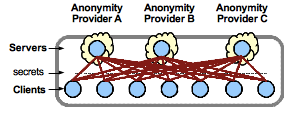
Sock-puppet- and traffic-analysis-resistant group conversation protocol


Dissent implements the Dining Cryptographers and Verifiable Shuffling algorithms to produce a group-conversation system that is resistant to traffic analysis. Feels like we’re entering the second golden age of cypherpunk.
Read the rest

from Boing Boing http://boingboing.net/2014/12/17/sock-puppet-and-traffic-analy.html
via IFTTT

Mormon's Secret: temple garments for gentiles


The company was founded by a formon (former Mormon) named Ann Jackson who was married as a teenager and has since divorced and left the faith — she’ll sell "temple garments" (AKA "magic Mormon underwear") to anyone who wants ’em, and promises that none of the profits go to the LDS.
Read the rest

from Boing Boing http://boingboing.net/2014/12/17/mormons-secret-temple-garme.html
via IFTTT

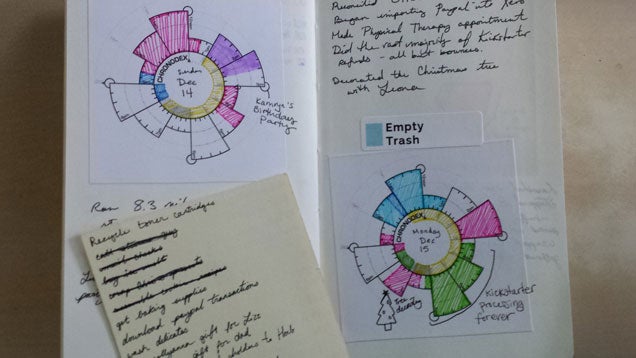
Track Your Time with a Colorful Chronodex to Get More Done

Track Your Time with a Colorful Chronodex to Get More Done

The Chronodex is a graphical way of visualizing and keeping tabs on your time every day. For very visual people, this might be the perfect system for adding more accountability to your activities and motivate you to use your time better.

We talked about the Chronodex a while ago, but this recent post by WordPress developer Kellbot really hammers in the benefits of using the Chronodex to track your time:

She writes:

Once I started accounting for my time, some really important things happened. I started to feel better about myself because I was acknowledging the things I accomplished in a day. I started thinking about my time in 15 minute blocks which has helped me focus a lot on the task at hand. I am better at stopping myself from jumping between work, home, and play because I’ve internalized that I’m "in a work block" or "in a family block." When I take a break I take a full 15 or 30 minute break instead of just shoving food in my face while sitting at my keyboard.

Most importantly, the system is like an art project for her and a reward in itself:

My reward for being productive is that I get to shade in that time on my Chronodex afterwards.

To learn more about how the Chronodex works, head to Scription, the site of the original inventor, Patrick Ng, or check out this other introduction to the system.

Time Management as an Art Project | Kellbot

from Lifehacker http://lifehacker.com/track-your-time-with-a-colorful-chronodex-to-get-more-d-1673235700
via IFTTT

The Easy Way to Calculate How Much You'll Need to Save for Retirement

The Easy Way to Calculate How Much You'll Need to Save for Retirement

Figuring out how much you’ll need to save to comfortably live in your older years can be a tricky—and daunting process. Getting the finite details is one thing, but coming up with an estimate to work towards isn’t. Here’s some super-quick math you can do to figure it out.

Over at US News Money, Scott Holsopple explains that the first thing you should do is to take the amount of money you’re making today—your current annual salary, pre-tax (since a lot of people forget they’ll have to pay taxes after retirement too!)—and multiply it by 20.

This assumes you’ll spend roughly 20 years in retirement, which may or may not be what you’re aiming for, but it’s a good estimate. If you have a particularly long life expectency, you might want to bump that number up a bit. If you’re young and you think your earning potential hasn’t capped out yet, use the salary you think you’ll have at 35 or so for this calculation. Once you’re finished, you’ll have your target nest egg.

You’re not done yet though. How much you should actually aim for now depends on what kind of lifestyle you want to life when you’re older. Now you need to factor in the "replacement ratio" for the lifestyle you’d like. Here’s what Holsopple says:

Simple lifestyle versus current; little-to-no-travel; inexpensive hobbies: 80%

Moderate lifestyle versus current; upgrades to home and car expected; some travel and hobbies planned, but nothing lavish: 90%

Maintain your current lifestyle: 100%

Improved lifestyle versus current; increased travel and hobbies: 110%

If you expect to have remaining debt upon entering retirement, add 5 percent to 10 percent to your replacement ratio depending on the amounts you still owe.

Once you know your replacement ratio, use this calculation:

(current income x replacement ratio) x 20 = your retirement savings goal

For example, if you currently earn $100,000 annually and determined your replacement ratio to be 90 percent:

($100,000 x 0.90) x 20 = $1,800,000

Again, this assumes you’ll spend 20 years in retirement, so adjust accordingly if necessary.

It may sound tricky, but it’s easy to do, and gives you an idea what you should aim to save towards, starting now. The sooner you start, the easier it’ll be. Of course, if you plan to work into your retirement years, or work until you just can’t anymore, that’s fine—but it shouldn’t stop you from saving in case you simply can’t, or something happens to force you to live off of your savings.

There’s obviously more to planning for retirement than this, but it’s a good estimate. Hit the link below to read more, and take the next steps after these.

How to Make a "Fit" Retirement Plan | US News Money

Photo by discpicture (Shutterstock).

from Lifehacker http://lifehacker.com/the-easy-way-to-calculate-how-much-youll-need-to-save-1539111110
via IFTTT